• Skip to primary navigation
  • Skip to main content

Jennifer Neeley

Strategic Marketing Advisor for Trust-Sensitive Growth

  • Home
  • Strategic Advisory
    • Fractional & Interim Marketing Leadership
    • Healthcare Advisory
    • Professional Strategy Advisory
  • Insights
  • Speaking & Media
  • Teaching & Executive Education
  • About Jennifer
  • Contact
  • Options & Availability
You are here: Home / Archives for influence strategy

influence strategy

The Ring Light Wasn’t the Problem. The Strategy Was.

Jennifer Neeley · September 7, 2026 ·

A debate about influencer behavior at the US Open debate exposed a broader influencer-marketing problem: access can generate attention while making the activation itself more visible than the event.

On September 4, Yahoo reporter Kelsey Weekman quoted me about influencer fatigue at the US Open. The line that made the article was that fatigue begins “when creator access starts to feel more visible than the event itself.”

I stand by it. But the easiest version of this story is also the least useful: influencers showed up, behaved badly and ruined something people love.

That is satisfying. It is also much too simple. This is not a complaint about creators. It is a question about the strategy built around them.

The backlash is not really about influencers

The US Open is a natural creator environment. Fashion, celebrity, luxury hospitality, sports fandom and spectacle already overlap there. Inviting people who can translate the experience for audiences who may not follow tennis is not inherently cynical. Done well, it is smart audience development.

The expansion had a stated purpose. The USTA told Front Office Sports that it approved close to 100 creator credentials in 2026, up from 54 in 2025, to broaden coverage of the tournament. It also said the first credentialed cohort generated more than 5.5 million social engagements. Players quoted by the Associated Press recognized the value of reaching new audiences even as they objected to behavior that interrupted play.

Reach was measurable. Meaning was the harder question.

The AP reported that a chair umpire stopped play while people in a suite recorded a video and that a bright ring light was used during another incident. Yet the accountability was more complicated than much of the backlash suggested. Forbes reported that the guests involved in the widely circulated suite incident were not part of the official creator-credential program.

That distinction does not weaken the strategic lesson. It strengthens it. This was not simply an influencer problem. It was an experience-design, access and governance problem.

Promotional sameness is a strategy problem

When every invited person films the same entrance, holds the same drink, photographs the same sandwich and poses against the same recognizable backdrop, the result may produce enormous volume without adding much meaning.

That is promotional sameness: different people producing versions of the same advertisement.

The creators may be doing exactly what they were invited to do. If the brief rewards recognizable repetition, access display and immediate posting, it is strange to blame them when the output feels repetitive, transactional and detached from the event.

The strategic question is not whether creators belong at the US Open. It is whether the program gives them a reason to notice, understand and contribute something an ordinary sponsorship placement cannot.

Access changes the meaning of content

Scarcity changes the calculation. When fans see the best seats and hospitality spaces as expensive or out of reach, creator access is not judged as content alone. It becomes a story about fairness, status and who the institution appears to value.

A courtside photo is no longer only a courtside photo. It becomes evidence of who got in, who did not and whether the person with access seems to understand what that access was for.

Brands often treat access as a distribution asset. Audiences experience it as a social signal.

That gap is where resentment grows.

We often apply a different test to celebrities

Two years earlier, Travis Kelce arrived at the US Open in head-to-toe Gucci, generated headlines about his clothes and later acknowledged watching football on his phone during the match. He was certainly part of the spectacle. Yet celebrity performance is often treated as charming, while creator performance is treated as proof of cultural decline.

Why? Is celebrity distraction more legitimate because the fame came first? Or did the same behavior look charming because it fit the celebrity we already thought we knew?

I do not raise this to criticize Kelce. I raise it because “influencers ruin everything” often disguises a less comfortable conversation about status. We tolerate performance from people whose access already feels culturally authorized. We resent it from people whose access feels newly manufactured.

What a better program would do

A stronger creator or hospitality strategy begins before anyone enters the suite.

Define the guest’s role. Are they there to explain the sport, interpret its culture, reach a new audience, document hospitality or merely produce recognizable proof that the event is desirable? Those are different assignments.

Brief for difference. Give people access to angles, experts and stories that allow them to make something other than the same post everyone else is making.

Make the norms explicit. If silence during play matters, explain why, reinforce it in the environment and make hosts responsible for the conduct of invited guests. Etiquette cannot remain an assumption when audience expansion is the strategy.

Measure beyond reach. Did new audiences understand more about tennis? Did the activation improve affinity? Did it attract people the sport wants to retain? Did fans feel invited into the experience, or reminded that the best parts were reserved for someone else?

Millions of impressions cannot answer those questions by themselves.

Reach can grow while trust shrinks

The US Open did not create influencer fatigue. It gave the problem a stadium.

The answer is not fewer creators by default. It is better judgment about access, context, difference and the audience on the other side of the post.

Attention can expand while trust contracts. A campaign can travel farther while making the institution feel smaller. A marketing program can hit its numbers while quietly teaching people to resent the people carrying the message.

The ring light was the easiest thing to blame. The strategy deserves the harder look.

Before you add more attention

If your organization is planning a creator program, sponsorship, high-visibility launch or public repositioning, start with the Strategic Advisory Diagnostic.

If the issue is larger than a campaign and touches positioning, reputation or stakeholder trust, explore Strategic Advisory.

Sources and further reading

  • Yahoo: Influencers are everywhere at the U.S. Open
  • Front Office Sports: US Open nearly doubles creator credentials
  • Associated Press: Influencers and tennis etiquette become US Open topics
  • Forbes: Creator credentials, hospitality guests and tennis etiquette
  • GQ: Travis Kelce and Patrick Mahomes at the 2024 US Open
  • Sports Illustrated: Travis Kelce watching football at the US Open

When Engagement Does Not Convert: Why Expert-Led Brands Need an Influence Strategy

Jennifer Neeley · August 18, 2026 ·

Illustration about expert-led brands needing trust and influence strategy, not engagement alone.A campaign can look successful and still fail where it matters.
I have seen this happen in everyday marketing conversations. The engagement numbers look strong, so the campaign gets treated as proof that the strategy is working. More likes. More comments. More shares. More views. More people talking about it. That may be useful. It is not the same thing as influence. Engagement tells us that something happened. It does not tell us whether the right people became more likely to trust, refer, book, buy, invest, recommend, or choose. That is the distinction too many organizations blur. Digital platforms are very good at rewarding reaction. Research has found that social media design can amplify moral outrage, and engagement-based ranking systems can favor emotionally charged content. That does not mean every high-performing post is shallow or manipulative. It means engagement alone is not enough evidence that a strategy is working. Outrage engages. Confusion engages. Spectacle engages. Conflict engages. Manufactured intimacy engages. Parasocial attachment engages. But reaction is not strategy. A post performs well. A creator campaign generates activity. A video gets comments. A media moment travels. And suddenly the assumption becomes: The strategy is working. Maybe. But maybe not. In healthcare, law, financial services, consulting, and other expert-led fields, that mistake can get expensive. A physician can have a popular post and still fail to make a prospective patient feel safe enough to book a consultation. A lawyer can get views on a sharp legal take and still make a potential client question their judgment. A financial advisor can publish constantly and still fail to create the confidence required for someone to trust them with intimate, consequential decisions. A specialist practice can generate consults and still lose money if the strategy does not account for what happens after the consult: procedure conversion, treatment acceptance, referral quality, partner credibility, and long-term patient value. That is where the marketing read often gets too shallow. The visible conversion point is not always the real business conversion point. For years, many professionals could rely more heavily on credentials, referrals, location, institutional affiliation, or reputation by default. Those signals still matter. But they no longer operate alone. Search results, online reviews, social proof, media visibility, social content, and AI-mediated discovery now shape first impressions before a prospective patient, client, buyer, investor, or referral partner ever reaches out. Recent healthcare survey coverage, for example, reports that patients are using online reviews, AI tools, and social media when researching physicians. Pew has also found that users are less likely to click traditional search results when Google AI summaries appear, which matters for any organization still assuming search visibility works the way it used to. But attention alone does not carry the decision. Professionals do not just need to be seen. They need to be believed. They need to be understood. They need to be credible before the consult, sales call, referral conversation, board discussion, or treatment decision ever happens. This is where I see many organizations get stuck. They have activity. They have visibility. They may even have engagement. But they do not have a clear influence strategy. The audience is too broadly defined. The expert is visible, but not clearly positioned. The content is performing, but not qualifying. The message is active, but not tied tightly enough to trust. The campaign is moving, but not moving people toward a decision. That is when more content is not the answer. Better strategic architecture is. The same issue shows up outside professional services. A founder can become highly visible without becoming more trusted. A brand can dominate a conversation without becoming more differentiated. A campaign can generate interaction without moving anyone closer to choosing the organization. That is why I care less about engagement in isolation and more about what kind of engagement it is creating. From whom? In what context? Driven by what emotion? Connected to what business goal? At what reputational cost? Most importantly: Does this attention make the brand more credible – or merely more visible? I see this tension often in my Digital Marketing and Influencer Marketing courses at UC San Diego Extended Studies. Many younger, digital-native students understand attention manipulation faster than some organizations expect. They know when something is bait. They know when a creator feels scripted. They know when a brand is trying too hard to manufacture intimacy. They have grown up inside these systems. Activity alone does not impress them. That is the part many organizations still underestimate. A post can spread widely and still weaken trust. An influencer can generate attention without changing anyone’s decision. A brand can dominate a conversation and still fail to build authority. Engagement is a signal. It is not strategy. The real work is building the strategy that turns attention into trust, trust into confidence, and confidence into action. Otherwise, engagement is just noise with better metrics.

Sources and Further Reading

This article draws on research and reporting about engagement-based amplification, online trust signals, patient decision-making, and AI-mediated search, including:
  • Brady et al., “Emotion Shapes the Diffusion of Moralized Content in Social Networks,” PNAS. Useful for understanding why emotionally charged content can travel farther online. https://www.pnas.org/doi/10.1073/pnas.1618923114
  • Brady et al., “How Social Learning Amplifies Moral Outrage Expression in Online Social Networks,”
  • Science Advances. Useful for understanding how social reinforcement can encourage outrage expression online. https://www.science.org/doi/10.1126/sciadv.abe5641
  • Knight First Amendment Institute at Columbia University, “Engagement, User Satisfaction, and the Amplification of Divisive Content on Social Media.” Useful for understanding why engagement-based ranking does not always align with user value or satisfaction. https://knightcolumbia.org/content/engagement-user-satisfaction-and-the-amplification-of-divisive-content-on-social-media
  • Pew Research Center, “Google Users Are Less Likely to Click on Links When an AI Summary Appears in the Results.” Useful for understanding how AI summaries are changing search behavior. https://www.pewresearch.org/short-reads/2025/07/22/google-users-are-less-likely-to-click-on-links-when-an-ai-summary-appears-in-the-results/
  • Medical Economics, “Patients Turn to AI, Social Media When Choosing Doctors, Survey Finds.” Useful as healthcare industry context on patients using reviews, AI tools, and social media when researching doctors. https://www.medicaleconomics.com/view/patients-turn-to-ai-social-media-when-choosing-doctors-survey-finds
  • rater8, “The Next Evolution of Patient Choice.” Useful as directional industry context on patient choice, online reviews, AI, and social media. https://rater8.com/the-next-evolution-of-patient-choice-2025-report/

Put the insight to work

Is attention becoming trust, authority and action?

The Neeley Trust Framework helps leaders separate visibility, influence, integrity and impact before deciding what to change.

Explore Strategic Advisory →Explore the Trust Framework →

The Content Gap Isn’t What You Haven’t Published. It’s What Your Buyer Still Can’t Understand.

Jennifer Neeley · August 17, 2026 ·

Most content-gap reports begin with a competitor.

What do they rank for that we do not? Which keywords have they captured? What pages should we create to close the distance?

Those are useful questions. They are not the first question.

The most expensive content gap is not what your competitor published. It is what your buyer still cannot understand about you.

That gap may sit between a service page and the decision someone is trying to make. It may be an unanswered objection, an unexplained method, a claim without evidence or expertise that is obvious inside the organization and nearly invisible outside it.

In 2015, I wrote that organizations needed to understand the language customers used, listen for recurring questions and create relevant answers instead of aiming blindly. Search has changed considerably since then. The underlying discipline has not.

AI search did not eliminate the content gap

Search no longer presents every user with a simple list of ten blue links. People ask longer questions, compare answers across platforms and encounter summaries assembled by generative systems before they visit a website.

That makes it tempting to create more pages for more possible prompts. Google’s current guidance points in a different direction. Its guide to generative AI features in Search emphasizes unique, useful, non-commodity content grounded in first-hand experience. It also warns against manufacturing separate pages for every query variation.

In other words: the answer is not a bigger pile of interchangeable content.

The work is to identify the missing information that helps a real person decide what to trust, compare or do next.

Five gaps that keyword tools do not fully reveal

1. The decision gap

A page can rank for a relevant term and still fail the person who arrives.

A healthcare executive may understand what a consulting firm offers but not when to bring it in. A founder may recognize the phrase fractional marketing leadership but not know whether the organization needs senior interim judgment, an agency or a permanent hire. An editor may see expertise without finding a concise, usable point of view.

The missing content is not another definition. It is decision support.

Ask: What choice is the reader trying to make? What would make one option more appropriate than another? What risk are they trying to avoid?

2. The evidence gap

Many organizations make claims that sound reasonable and leave the proof scattered across biographies, press pages, old case studies, interviews and internal presentations.

AI systems and human readers both benefit when authorship, sources, experience and dates are clear. That does not mean forcing credentials into every paragraph. It means making the evidence behind an assertion easy to locate and interpret.

If a page says an organization understands a market, show what that understanding is built on. If an expert offers a framework, explain where it came from, what it helps diagnose and what it does not prove.

3. The language gap

Teams often describe their work in the language of internal structure. Buyers describe the problem in the language of consequences.

The organization says integrated omnichannel strategy. The buyer says, “Our audience sees a different company everywhere they look.”

The organization says attribution maturity. The buyer says, “The dashboard says marketing worked, but revenue did not move.”

The organization says reputation management. The buyer says, “People can find the accusation faster than they can find the evidence.”

The best source for this language is rarely a brainstorming session. It is sales calls, support questions, search data, interview transcripts, classroom discussion, media inquiries and the sentences people use when they are not trying to sound strategic.

4. The journey gap

A strong article can still underperform if it sits alone.

Someone discovers the idea but cannot reach the relevant service, supporting analysis, author biography or next step. The content earns attention and then abandons it.

Internal linking is not merely a search tactic. It is editorial guidance. It tells the reader how one idea connects to another and where the analysis becomes useful.

This is why durable articles on a canonical website should connect naturally to related Insights, the appropriate advisory pathway and the author’s body of work. Distribution on LinkedIn, Substack or Medium can then introduce a different angle without creating competing copies of the same article.

5. The judgment gap

Commodity content explains what everyone already knows. Useful expert content shows how to decide when the obvious rule does not fit.

The gap is often the sentence an experienced person almost removes because it feels too opinionated: the warning, distinction or exception learned through practice.

That judgment is difficult to discover through keyword volume because it may not yet have a standard phrase. It is also the part most likely to make the work worth finding.

A practical content-gap review

Before commissioning another batch of articles, review the current system in this order:

  1. List the decisions your priority audiences are trying to make. Use actual inquiries, conversations and search behavior where possible.
  2. Map the evidence they need. Identify the claims, qualifications, sources, examples and limitations that make an answer credible.
  3. Find the unanswered questions. Include questions answered verbally by sales, leadership or instructors but absent from the public site.
  4. Trace the path after discovery. Confirm that each useful article leads to relevant analysis, author context and an appropriate next step.
  5. Compare competitors last. Use competitive tools to locate opportunities, not to outsource the editorial agenda.

Tools can show where demand and competition exist. They cannot decide which unanswered question best expresses your expertise or which answer will help the right person act.

The point is not to fill every gap

Some gaps should remain empty. A topic may attract traffic without strengthening authority, serving the intended audience or supporting a meaningful decision.

The goal is not comprehensive coverage of everything adjacent to your field. It is a coherent body of work that makes your most useful judgment findable.

That was true when Hummingbird was changing search behavior in 2015. It matters even more when an AI-generated answer may become the first interpretation of your work.

Do not begin with what the internet is missing. Begin with what the people you want to help still cannot understand.

Originally published October 28, 2015. Materially updated August 17, 2026.


Sources

  • Google Search Central, Optimizing your website for generative AI features on Google Search, updated July 10, 2026.
  • Google Search Central, Creating helpful, reliable, people-first content.

If your buyers still have to assemble your credibility for themselves, explore Strategic Advisory.

Related: When Engagement Does Not Convert | The Influence Project | About Jennifer Neeley

Guest Hosting Truth & Justice: What Bob Ruff Told My Students About Trust and Influence

Jennifer Neeley · May 25, 2026 ·

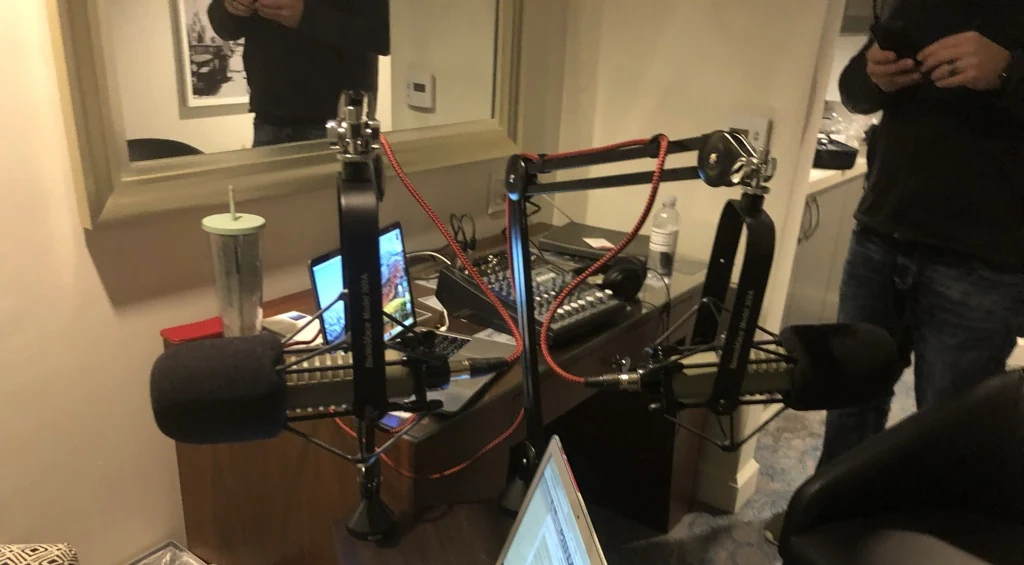
Two boom microphones. A mixer, headphones and laptops spread across a hotel-room desk. Cables everywhere. Bob Ruff leaning over the equipment to get the recording right. It is not a polished studio portrait, and that is exactly why I like these photographs. They show the work behind the conversation.

This episode began with my UC San Diego Division of Extended Studies Influencer Marketing students. They submitted the questions, and Truth & Justice host Bob Ruff invited me to guest host a Friday Follow-Up while he was on the road. I expected a useful conversation for the class. What we recorded was also a close look at how a host earns trust when the audience is not simply consuming a story but evaluating evidence, participating in the reporting process and caring about real people.

I remain grateful to Bob for opening that process to the class.

Two microphones, laptops and a mixer arranged for Jennifer Neeley's guest-host appearance with Bob Ruff.
Two microphones, two laptops and a hotel-room recording setup.

Hear the episode

Truth & Justice released this Friday Follow-Up on March 8, 2019. Bob invited me to guest host, and I brought the questions my UCSD students had submitted. The episode remains part of Bob’s podcast history; this page adds my photographs and the perspective I bring to it now.

  • Hear S6 Ep29: S6:E29 Follow-Up
  • Find Truth & Justice on Apple Podcasts
  • Find Truth & Justice on Spotify

Recorded for Truth & Justice with questions from my UCSD students.

What the students wanted to know

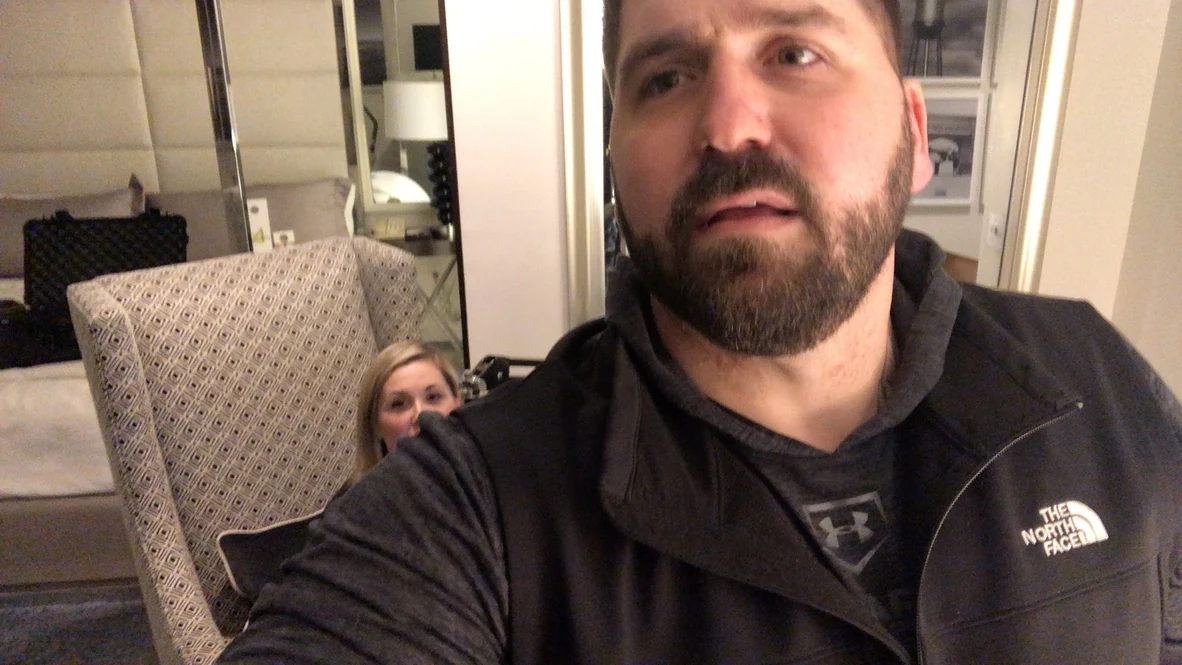
Bob Ruff in the foreground with Jennifer Neeley visible behind him during their recording session.
A candid moment from the recording session with Bob Ruff.

The students were not looking for a success story polished after the fact. They wanted to understand the choices behind the audience:

  • How does a host earn authority over time?
  • What responsibility comes with mobilizing public attention?
  • How should a creator distinguish reporting, interpretation and advocacy?
  • What makes an audience participate rather than merely listen?
  • What happens to trust when the evidence changes?

Those questions feel even more important now. True-crime podcasts can expose overlooked evidence and invite public participation. They can also turn grief, violence and uncertainty into entertainment. Current journalism and university work on true-crime ethics keeps returning to the same responsibilities: center the people affected, rely on primary evidence, avoid sensationalism and remember that an audience’s curiosity does not erase a subject’s humanity.

That does not make every host a journalist or every listener an investigator. It does mean influence in this setting has consequences.

Why I am listening back now

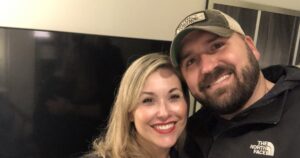
Jennifer Neeley and Truth & Justice host Bob Ruff smiling together.
Jennifer Neeley with Truth & Justice host Bob Ruff.

I am revisiting these interviews because they capture questions I was already asking through teaching, journalism and early social-media work: who gets believed, how audiences decide to participate and what changes when attention becomes collective action.

Some of the links around my old website aged. Bob’s episode did not disappear, and neither did the central issue.

A podcast audience develops its own expectations, habits and informal rules. Sociologists might describe some of these as norms or folkways: learned ways of behaving that become ordinary inside a group long before anyone writes them down. Psychology helps explain motivation, identification and trust. Anthropology asks us to look at the meanings a community creates together. Marketing metrics can describe the size and activity of the audience, but those other lenses help explain what participation means.

This appearance is separate from my own podcast archive. I am revisiting it because guest appearances can show a different side of the work: the questions I bring into someone else’s format, what I notice about that audience and what still feels unsettled years later.

The most interesting question was never how many people were listening. It was what the relationship between a host and an audience made possible.


Sources and listening notes

  • University of Texas at Austin, The Evolution and Ethics of True Crime Journalism, April 6, 2025.
  • Newcastle University, Creating a new code of conduct for true crime content, May 21, 2025.
  • This interview interview originally aired on the Truth & Justice podcast in March 2019.

For speaking, media, teaching or institutional inquiries, contact Jennifer Neeley.

Continue with Teaching & Executive Education, Speaking & Media, The Influence Project and About Jennifer.

The Most Revealing Interview I’ve Given Wasn’t Really About Marketing

Jennifer Neeley · March 3, 2026 ·

On the Empathy Unbound podcast, Andrew Phipps and I followed the through line from childhood loss and caregiving to the Neeley Trust Framework, generations, platform power, and AI.

I am used to explaining my work in tidy categories: journalist, strategist, educator, caregiver. Andrew Phipps did not let the categories stay tidy.

Early in our conversation on Empathy Unbound, he asked what connects the different chapters of my life. I started with the answer I usually give: interpretation. I have always been interested in what happens between intent and impact, and in the distance between what institutions say and what people actually experience.

Then I went further back.

My father died unexpectedly when I was eight. I became the responsible sibling early. I watched my mother navigate layoffs and learned not to assume that institutions, employers, or systems would catch us when something went wrong. Long before I had language for influence, trust, or platform power, I was watching who was protected, who absorbed the risk, and who got believed.

That is the personal history underneath much of my professional work.

It is why I care about the difference between visibility and authority. It is why I keep returning to the ways generations learn to trust differently. It is why I pay close attention when a healthcare message reduces a frightening human experience to a conversion path. It is why I worry about systems that can simulate empathy without accepting responsibility for what their persuasion does.

The conversation ranges widely because my life and work have ranged widely. We talk about not becoming a mother, caregiving for my brother, burnout, fertility marketing, generational resentment, media power, platform neglect, deepfakes, and AI guardrails. We also talk about optimism, although mine is neither simple nor passive.

It may be the most revealing interview I have given. Not because I arrived intending to confess anything, but because Andrew kept making room for the next honest answer.

When I listened back, I could hear the connection more clearly: I study influence because I have spent a lifetime noticing how power moves through families, institutions, media, technology, and care. Marketing is one place that pattern becomes visible. It is not the only one.

Not every conversation needs to become a framework. This one helped me understand why the personal and professional subjects I have tried to keep in separate rooms have always been talking to each other.

Thank you, Andrew, for creating a conversation spacious enough to hold all of it.

Key Topics in the Empathy Unbound Interview

If you do not have two hours, these chapters offer several ways into the conversation:

  • 01:49: The through line behind my work
  • 27:55: Caregiving, the outsourcing myth, and the real cost of responsibility
  • 34:44: Generationisms and the experiences that shape how generations see the world
  • 50:02: The Neeley Trust Framework
  • 01:07:47: AI, deepfakes, data, and accountability
  • 01:26:58: Pandemic caregiving, mindfulness, and learning self-compassion
  • 01:30:48: Trauma-informed fertility marketing

Watch and Listen

This conversation was published by Empathy Unbound on February 23, 2026.

Watch the full Empathy Unbound conversation on YouTube.

Prefer audio? Listen to Empathy Unbound on Apple Podcasts.

Continue the Conversation

For strategic advisory, speaking and media, teaching, or institutional partnership inquiries, visit the relevant pathway or contact Jennifer.

Explore The Influence Project and Generationisms for related work on trust, influence, culture, and technology.

Already know you need a focused 1:1 session?

Review the consultation formats and current availability before choosing a time.

Options & Availability
Jennifer Neeley

Strategy. Influence. Trust.

Explore

  • Home
  • Strategic Advisory
  • Insights
  • About Jennifer
  • Contact

Resources

  • Speaking & Media
  • Teaching & Executive Education
  • The Influence Project
  • Brand Resources
  • Options & Availability

Follow Jennifer

  • LinkedIn
  • Substack
  • YouTube
  • Instagram
  • TikTok
  • Threads
  • Bluesky
  • X
  • Facebook

© 2026 Jennifer Neeley. All rights reserved. Privacy Policy